
MYTHOS MONDAY: When the Light Gets Lost
Amaterasu & Susanoo from Shinto Mythology
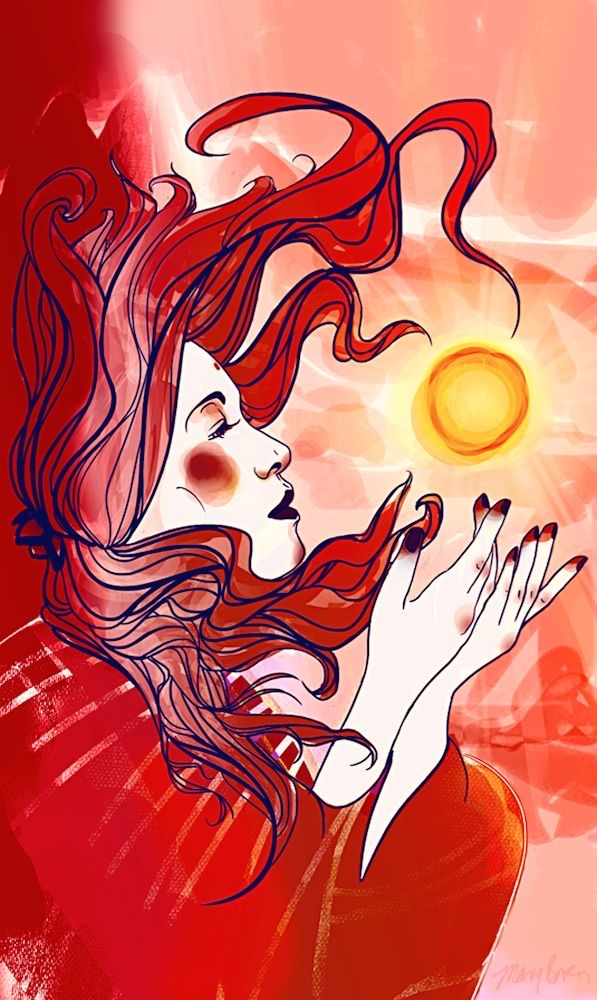
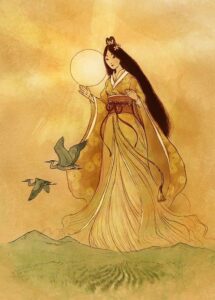
In Japanese mythos, Amaterasu is the goddess of the sun, made from the left eye of Izanagi, the Shinto Creator God.
Her brother, Susanoo, was the god of seas and storms. His wild nature made him prone to rebellion, chaos, and tantrums. When his father, Izanagi, banished him, Susanoo requested to say goodbye to his sister, Amaterasu.
Knowing his typical behavior and ways of trickery, she greeted him disguised as a man ready for battle, wearing armor and bearing weapons. When she asked him what his intentions were, and how she was to trust him, he said they should take an oath, create offspring, and then he would be on his way.
In the end, she created 5 boys, and he created 3 girls. This is when things started going south. Susanoo began bragging that because his intentions were the “most pure”, his three daughters were more beautiful and divine than her sons.
In his arrogance, he proceeded to run amok and wreak havoc in the wake of his self-proclaimed “victory”.
He caused the rice fields to flood and be destroyed. He defiled her sacred temple and dining hall. Amaterasu tried to extend grace to him, and give him a chance to calm down and move on without punishment.
Instead, his actions only became more harmful and brazen.
As his sister was in the weaving hall, overseeing the making of sacred robes, Susanoo broke through the roof, and hurled a flayed and skinned horse into the hall where they were working. One of her weavers was injured and died in the chaos.
Amaterasu, livid, opened a heavenly cave, went inside, and rolled a boulder across the door. Plunging the land into eternal and immense darkness. Her grace had been stomped on, her compassion disrespected, and so she turned away from the world, taking her light with her.
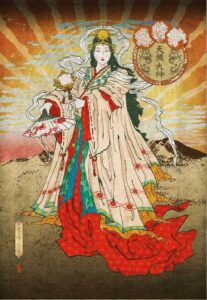
The other gods tried numerous ways to trick the sun into returning, but none of them worked. They hung a bronze mirror and elaborate jewels in a sakaki tree right outside her cave, but it was not enough to coax Amaterasu out into the world. Finally, the goddess Amenouzume had an idea. She draped herself in beautiful fabrics, leaves, and vines – climbed onto an overturned tub – and proceeded to dance. The Kami cheered and laughed – and the noise piqued Amaterasu’s curiosity. She thought to herself “I have plunged the world into darkness. How can they possibly be this joyful without light? Without me?”
Amenouzume taunted her, saying “Sitting around in the dark was boring, so we decided to have some fun! Oh, and we found another god who is even more radiant and magnificent than you!”
Amaterasu pushed the stone aside and they shined the bronze mirror at her. She could hardly believe her eyes – another sun goddess was staring back at her. How could this be? But that was the trick… what she really saw in the mirror was her own radiance blazing back at her. In the darkness of her isolation, she had lost sight of her own light.
That was the moment that one of the gods took her hand and pulled her out of the cave, bringing the light of the sun back into the world.
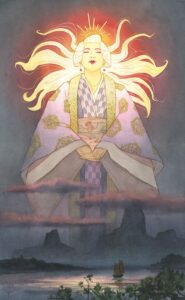
I wanted to tell this story this week because we have a new moon that is bringing with it a total solar eclipse in Leo. The light and the darkness are converging, and for a brief moment, in certain areas of the world, the light of the sun will disappear completely. Beyond those parallels, the overlap between the lessons in this story, and pieces of our collective reality right now, are undeniable.
In this myth, Amaterasu did not withdraw her light because she was being dramatic. She withdrew because something real and damaging has happened to her and those she cared for, and yet the world did not intervene or protect them from it. The darkness that followed this was not her failure or her selfishness – it was a moment of necessary reprieve for what she had endured. It was not a consequence of her own making – it was a proportional response to what she had been forced to survive.
Notice who the harm landed on here.
Susanoo’s rage may have been aimed at his sister, but the things he destroyed weren’t just hers. The rice harvest that was destroyed was meant to feed the people, the halls and temples that were defiled served as work and shelter for them all, and the weaver who lost her life was a person who was just doing her job.
This story is a reminder that when the powerful throw tantrums, the damage almost never lands on them. Their privilege gives them a shield from their own harm – instead, it lands on the “everyday” people doing “ordinary”, essential, unglamorous work.
This is the reality of corrupted power coupled with destructive chaos.
It is also important to note that Amaterasu’s withdrawal represents the power of boundaries and access. A lot of us have gone into a cave of our own throughout the last several months, or even several years. Collectively, the news we bear witness to is painful, crippling, debilitating. Partnered with the overwhelming tempo of life, jobs that ask too much, financial burdens, and societally encouraged isolation – many of us have found ourselves burnt out, disconnected, and feeling internally paralyzed and perpetually alone. This is not just apathy – it is what happens when harm goes on too long – unmitigated and glorified. The exhaustion is a reality of paying attention and yearning for a moment of light amidst the immense darkness. It is not a moral failing or a character flaw – it is a reminder of what happens when we are robbed of our own light.
But I also want us to notice something else that I think our world could stand to apply…
Susanoo was adequately punished in this mythos. After Amaterasu was back in the world, Susanoo was held accountable. He was stripped of his beard, his fingernails, and banished from the heavens. He was only allowed back in much later, through real redemption and work.
This myth reminds us that true peace cannot skip the step of accountability. True harmony requires honesty and proportional consequences.
Without accountability, harmony is an illusion, and true reconciliation is often impossible.
This is an important distinction worth noting in a world when we are so often asked to “move on” before anything has actually been changed, repaired, or adequately acknowledged.
I also think that Amaterasu’s return to the world being motivated by joy and curiosity is a powerful reminder that we don’t bring people back into the world and into life with guilt, shame, or force.
We bring them back by providing hope that there is something worth returning to.
This is why we need community.
This is why we need to build joy alongside grief.
This is why we need each other.
The light does not return if we abandon ourselves or if we abandon one another. It only returns if we choose to create hope for what can exist, and stand beside each other while we fight like hell to build it – together.
Because underneath it all, we are all walking each other home, and helping each other remember our light when we think that it may be lost forever.
Your Illumination Guide,
Lexi


